
Hi there,
I’m a Staff Product Manager and journalist-turned-technologist building AI-driven storytelling products at The Washington Post.
⇩
My Work

Innovation highlights & impact
-
![Audio]()
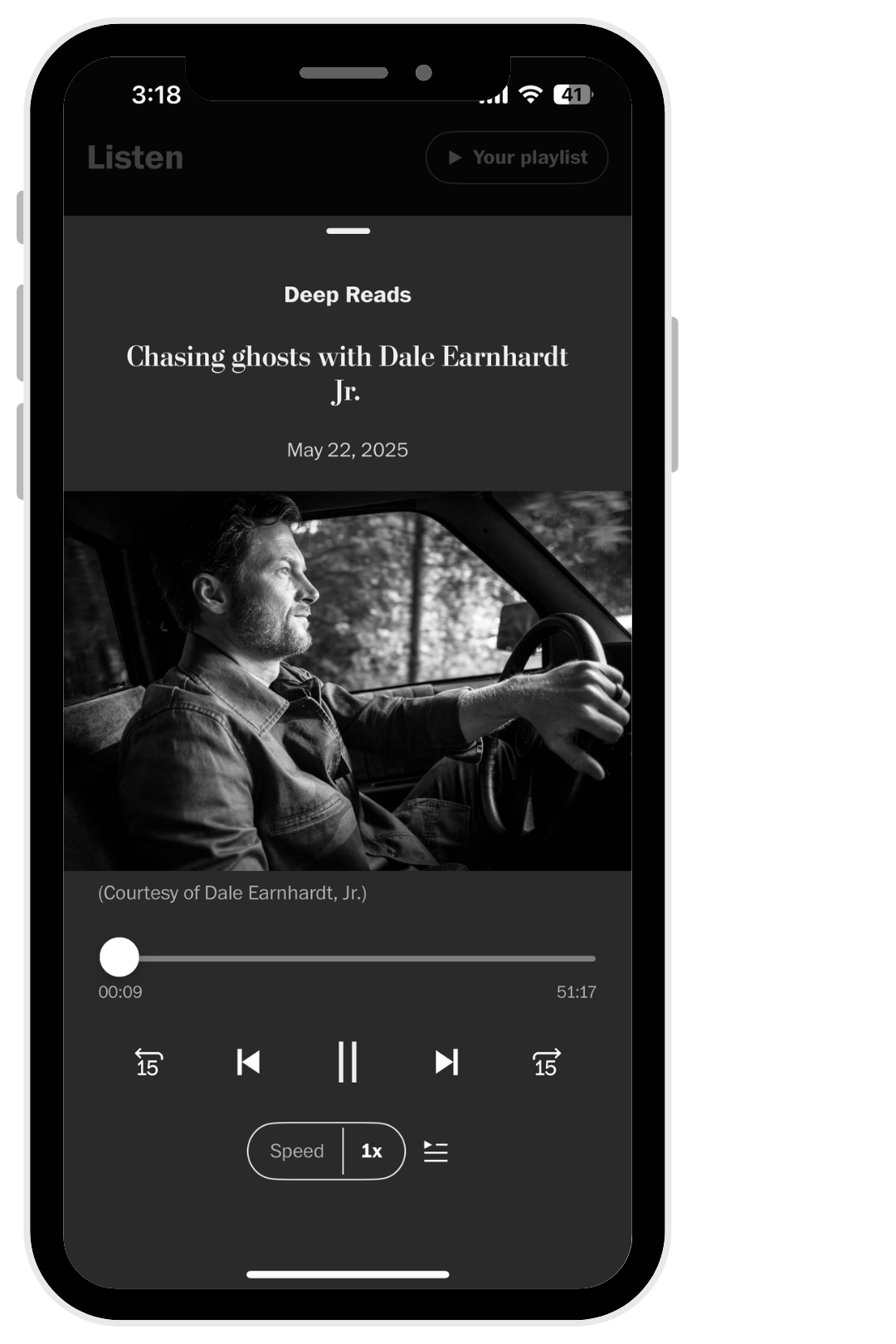
Audio
Built an audio strategy for app, growing the audio user base by +45% and starts per user by +59%.
-
![]()
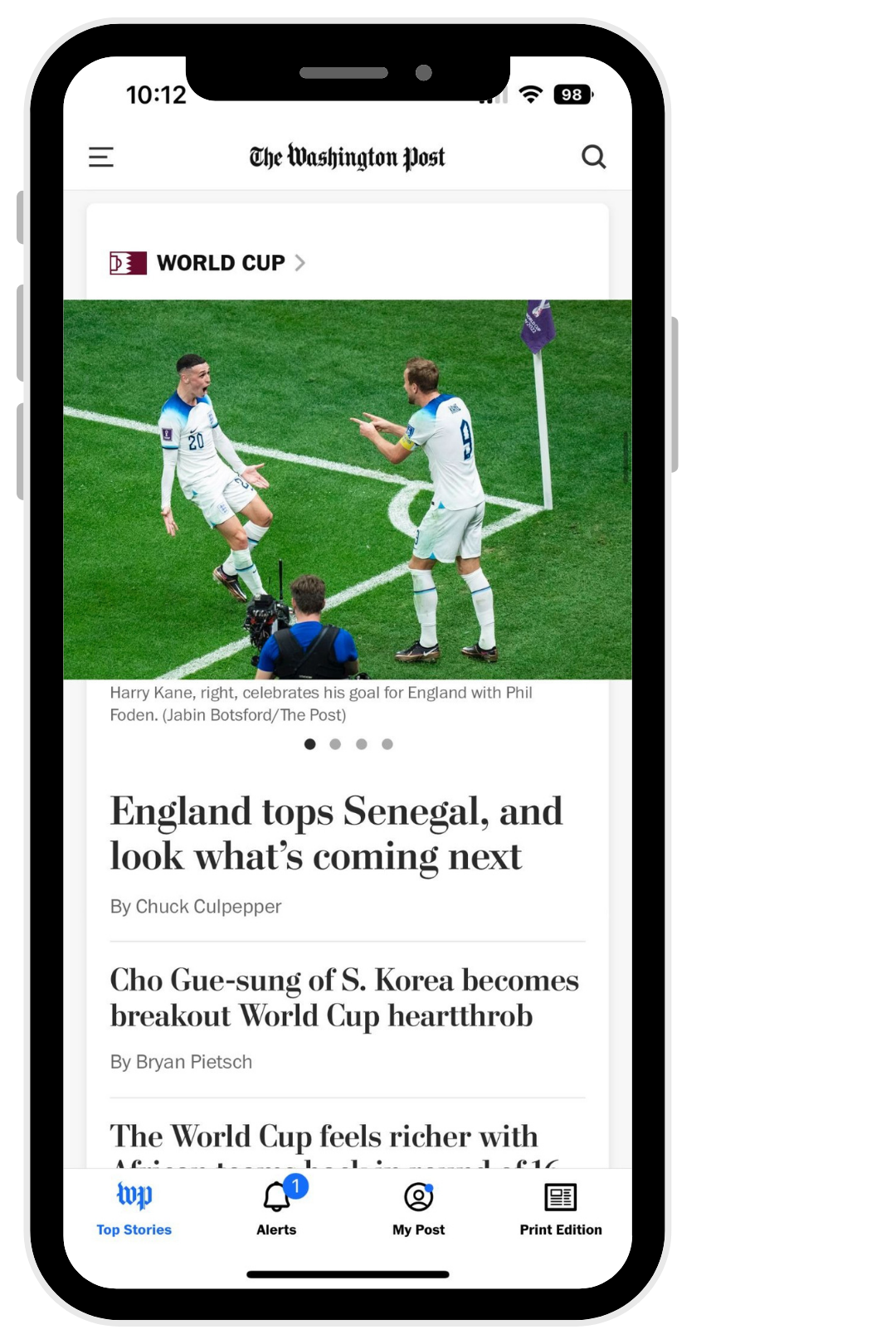
App Redesign
Led the mobile app redesign, growing CTR by +22%.
-
![]()
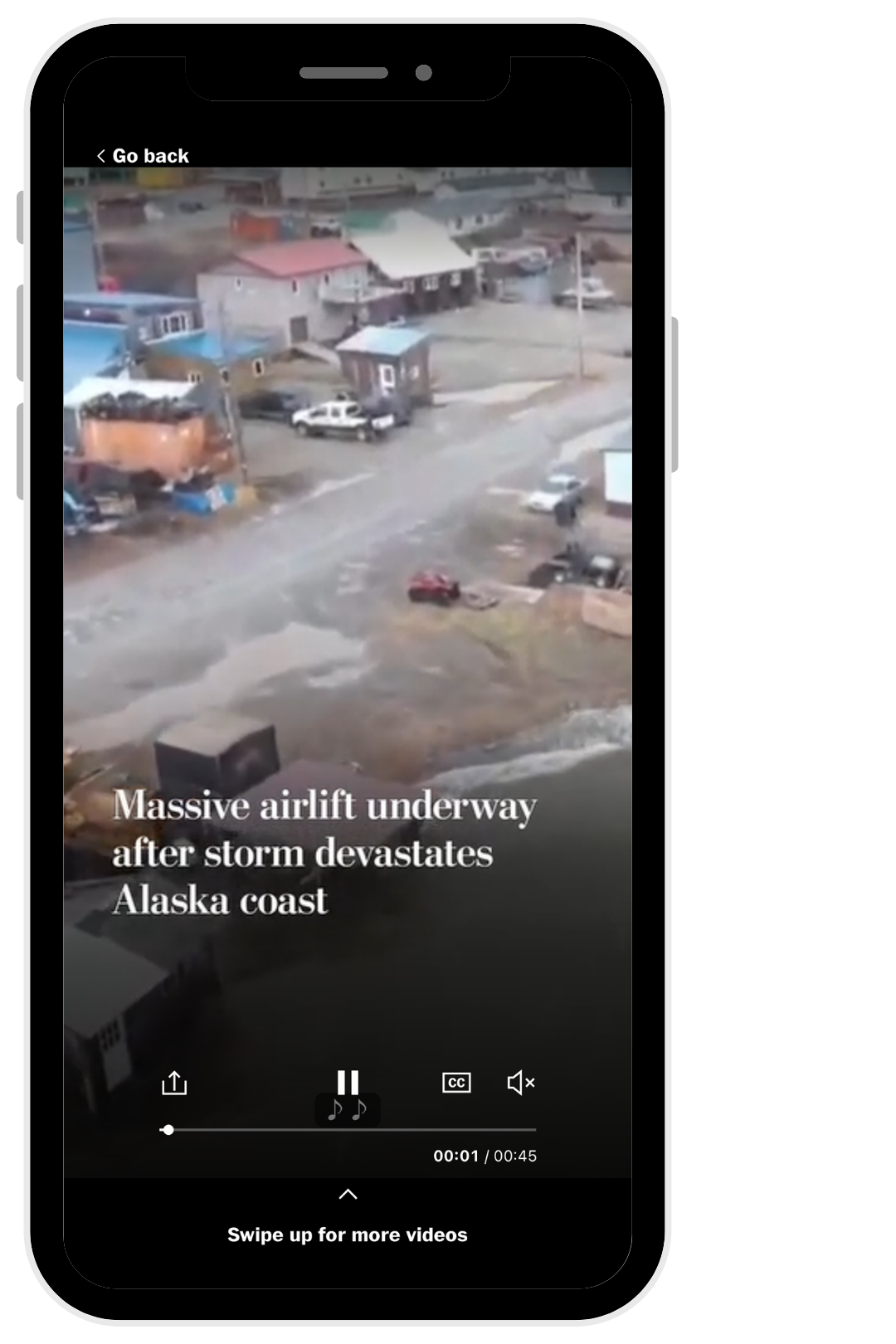
Video players
Led product development for continuous video experience, resulting in millions of additional video views.
-
![]()
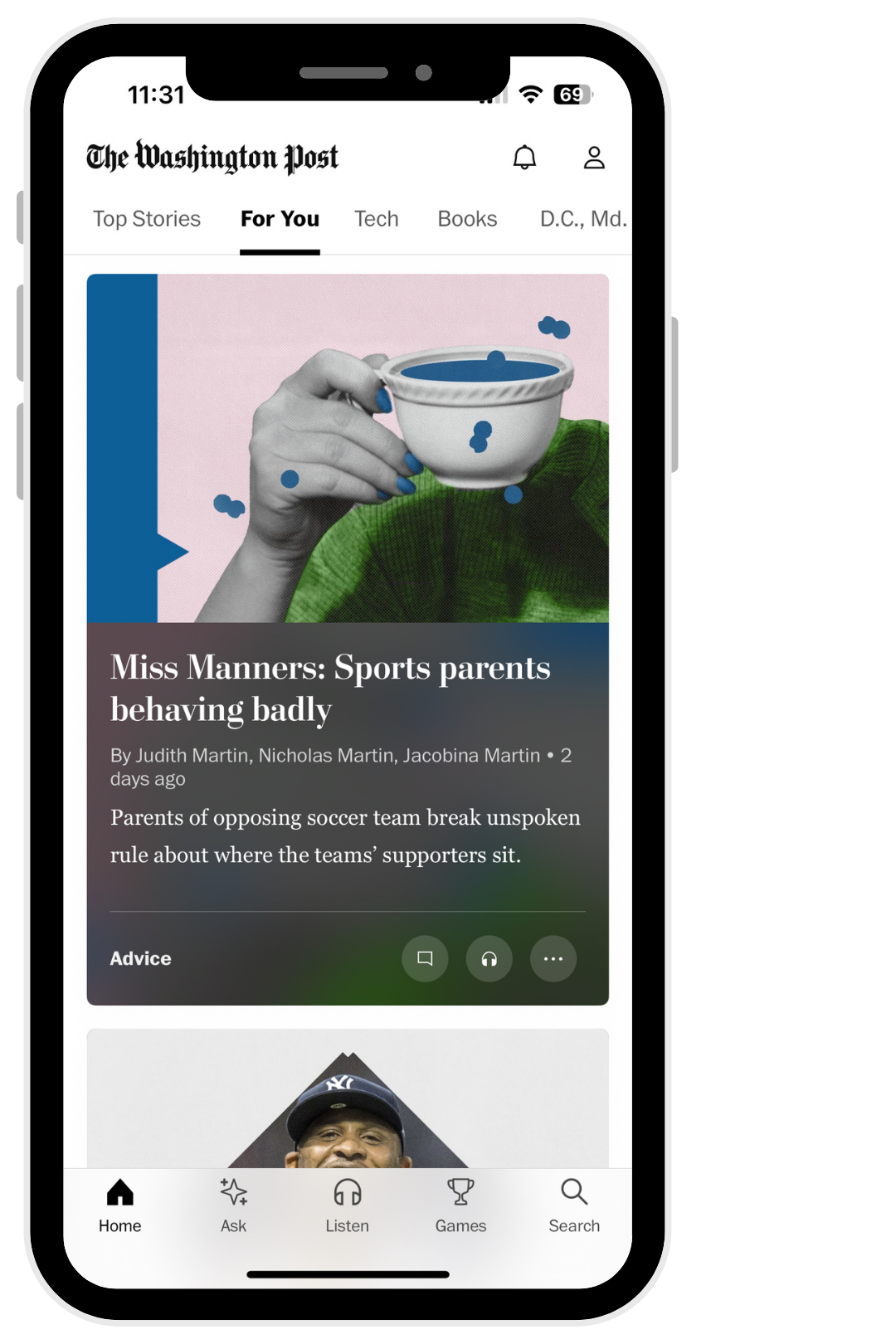
Personalization
Introduced a For You tab, and ran several A/B tests within the app, growing PVs by +9%.
-
![]()
AI Podcast
Led product development of Your Personal Podcast, which grew podcast completion rates.
-
![]()
Elections
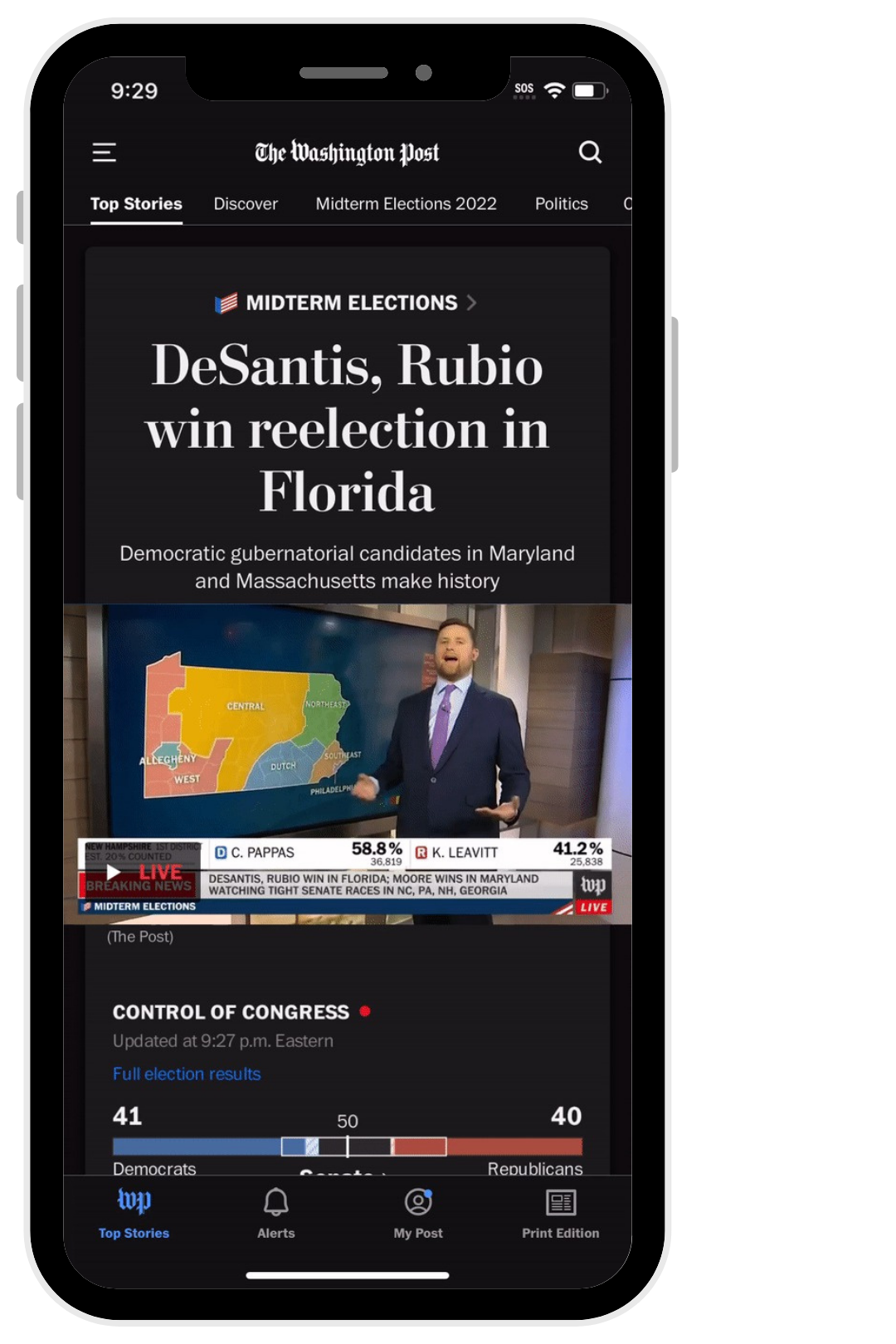
Led the team that introduced dark-mode election graphic embeds.
-
![]()
Games tab
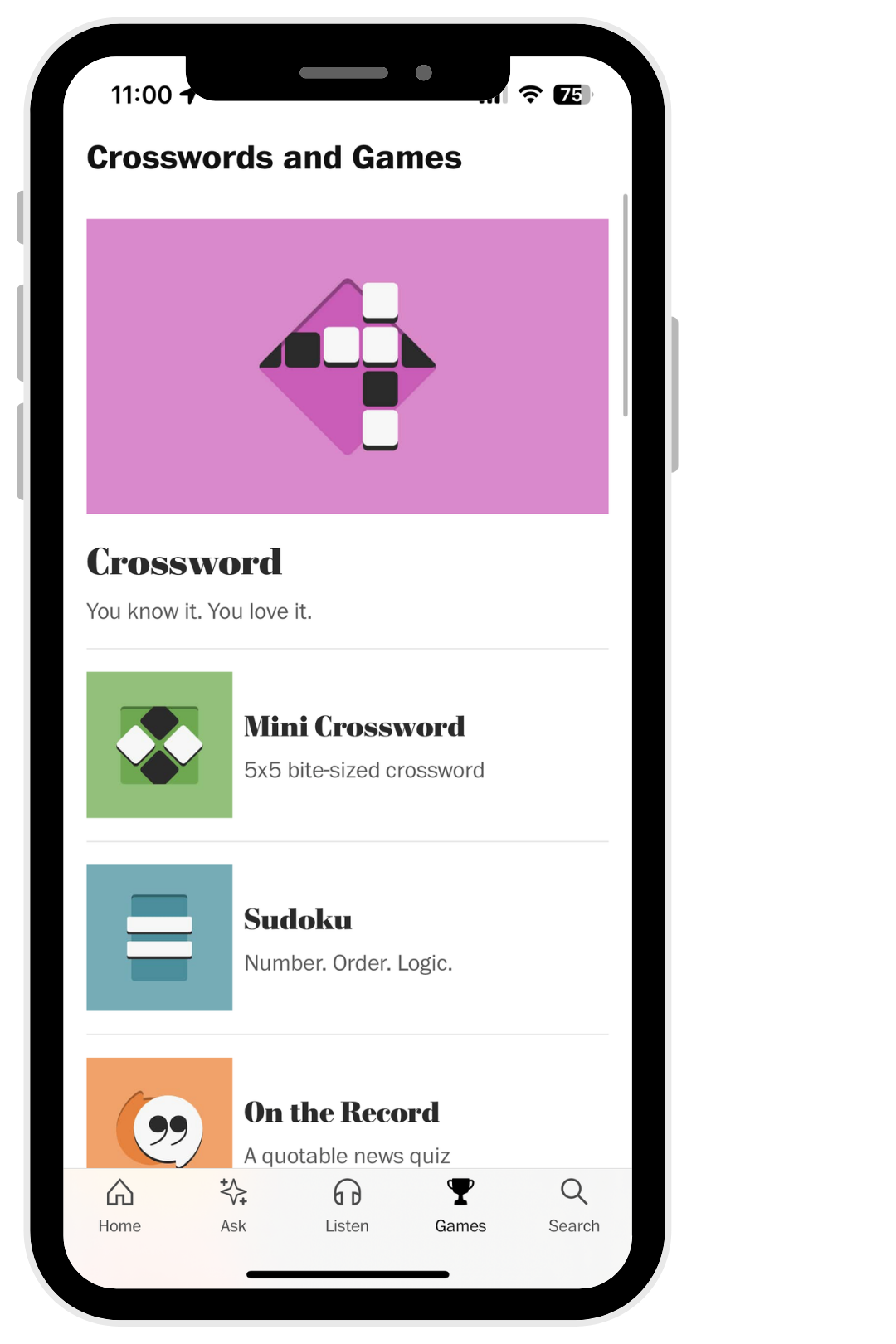
Launched A/B tests for game promotions, growing games user base by +12% and games ad revenue by +111%.
-
![]()
Customization
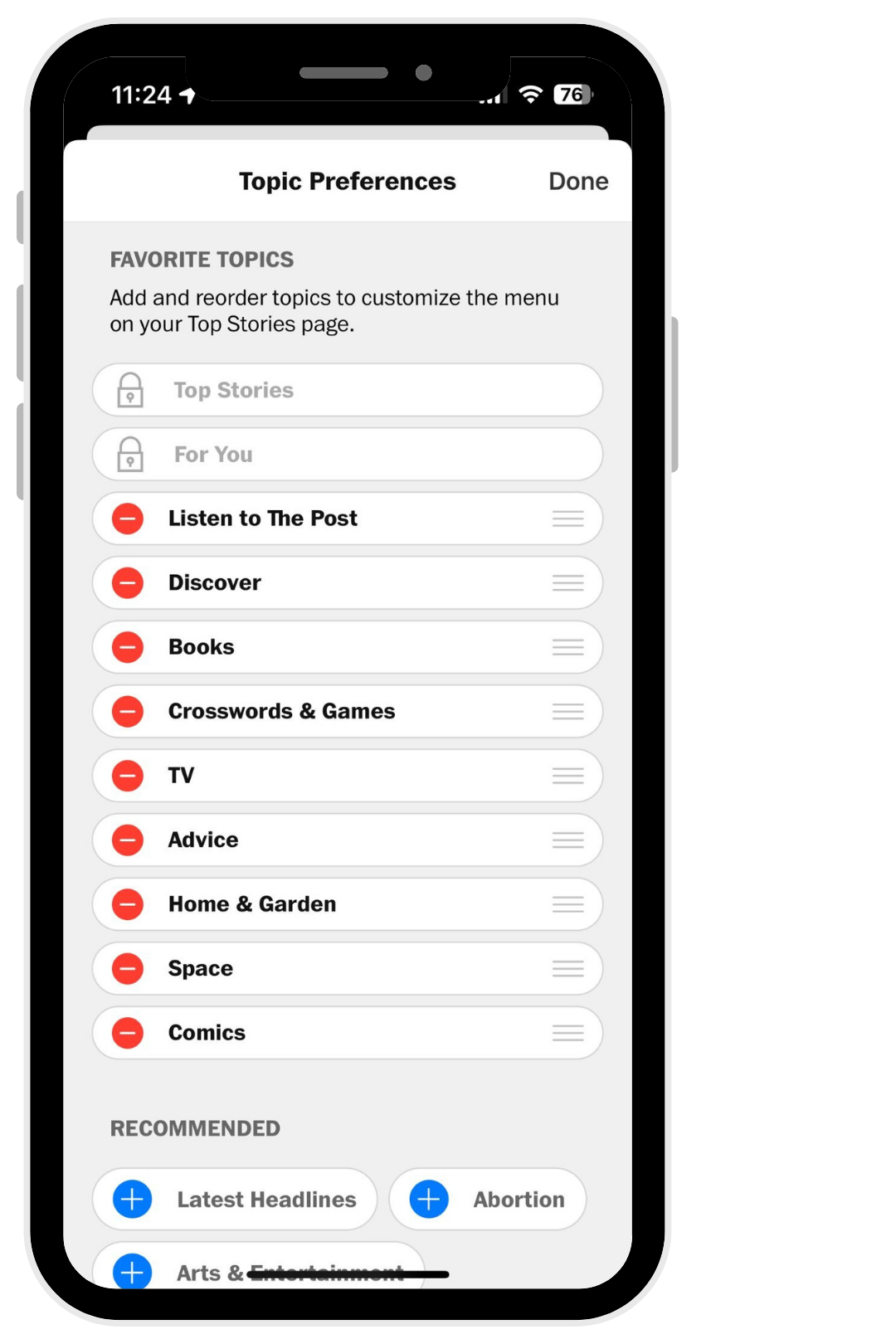
Built customization and personalization features in app.
-
![]()
Push Notifications
Overhauled push notification onboarding, leading to a +50% lift in enrollments.
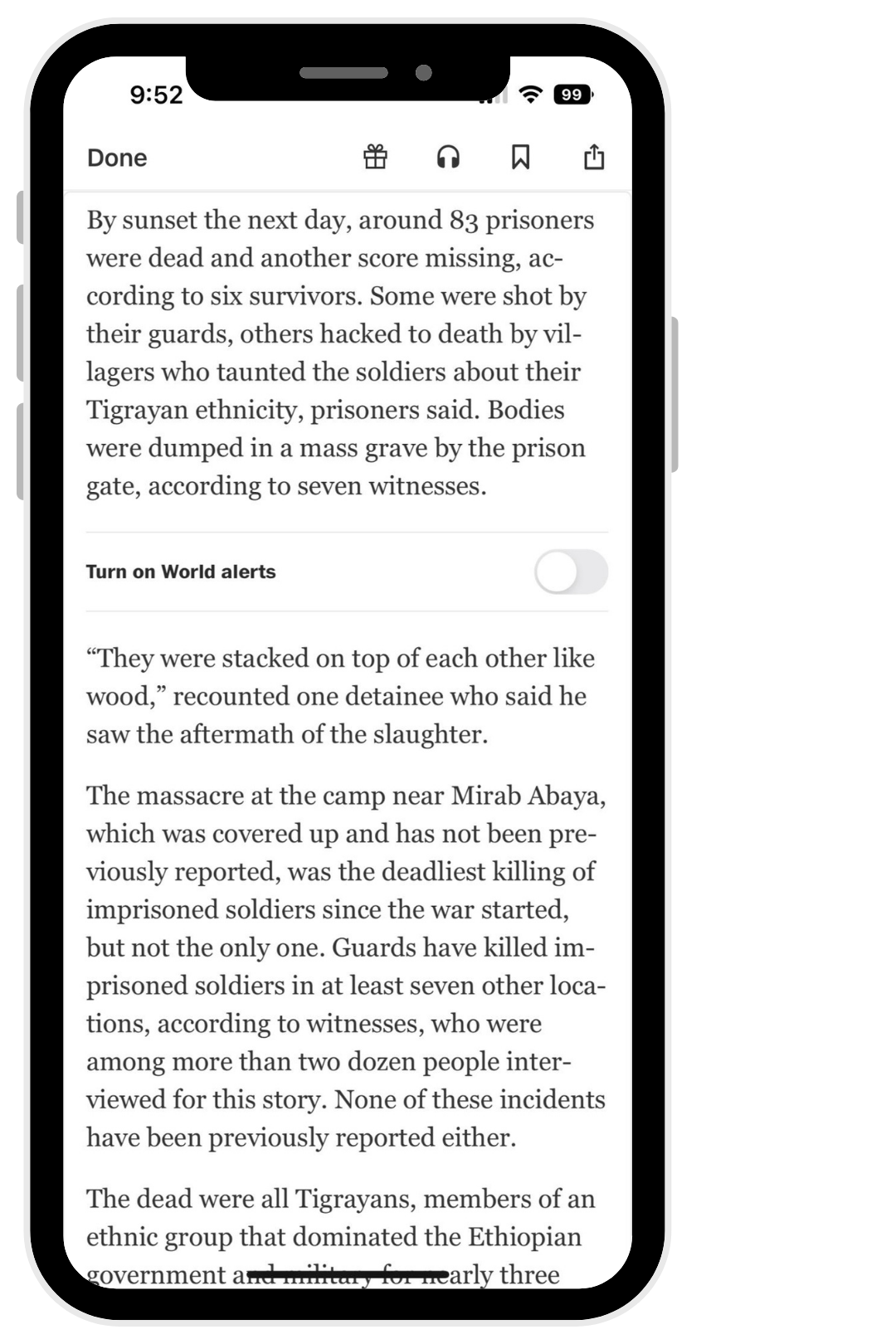

The world’s first interactive news podcast
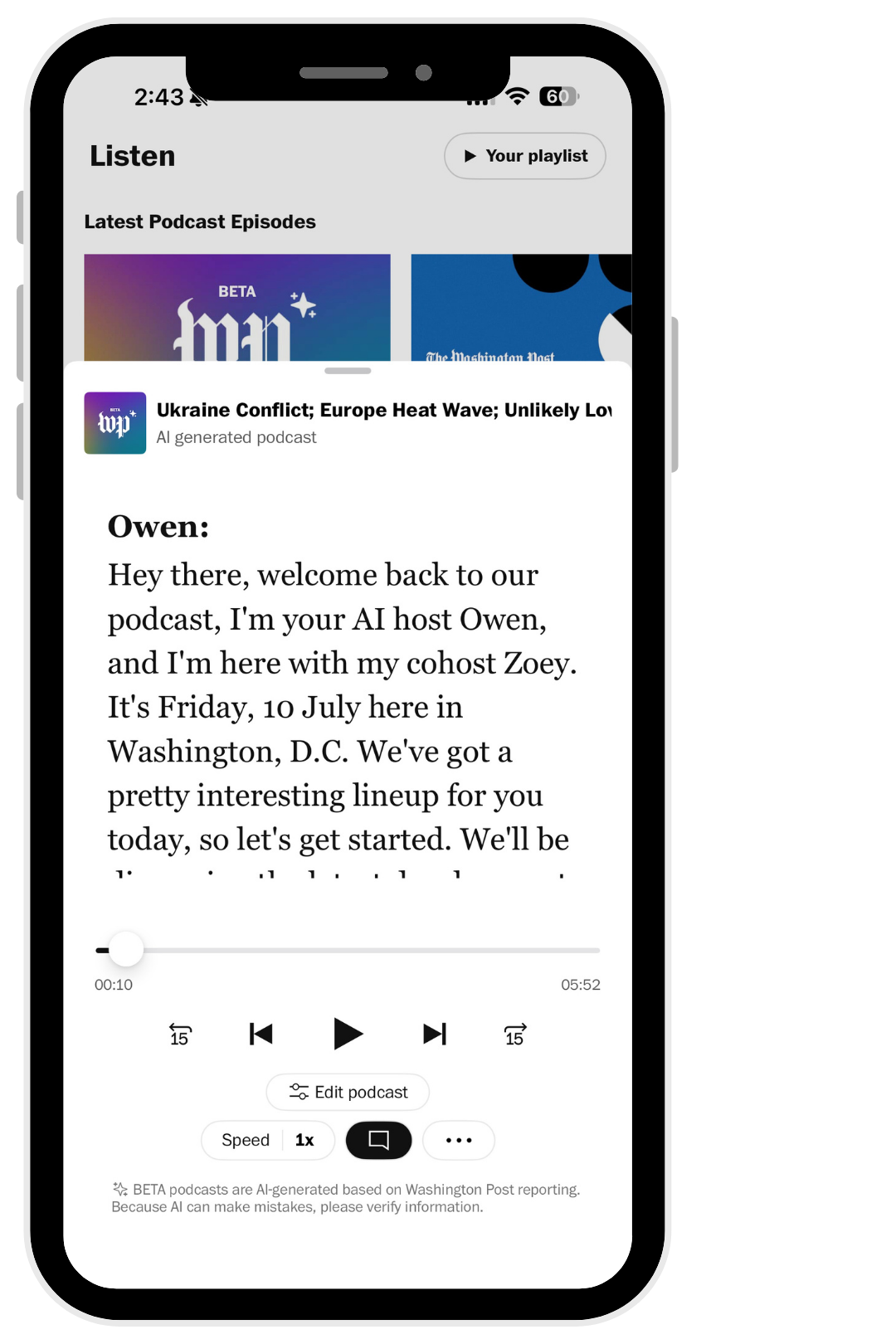
News consumers are reading fewer articles but listening to more podcasts than ever. The problem is, podcasts are expensive to make and can't really be personalized. So we set out to build one using AI that could: a podcast generated just for you, based on what you care about. I worked closely with newsroom editors to get the tone right, then built the system that turns every published article into a fresh audio segment and stitches them together based on each listener's interests. We designed it to feel less like "talking to a chatbot" and more like custom episode featuring friends catching you up on the news.
-
We wanted this to feel like a utility, not a gimmick — something you'd reach for to catch up during your commute. The goal was "hack your schedule," and the tone was two friends breaking down the news at whatever pace you prefer.
-
Getting an LLM to write news scripts that are journalistically sound took a lot of detailed refinement with editors — checking quality, adjusting the prompt, continuing to iterate. Once that was dialed in, every new article could generate its own script automatically. Then we pre-produced audio blocks and stitched them together on demand for a custom episode based on what each listener cared about.
-
Users finished these episodes at a meaningfully higher rate than our regular podcasts. We also learned something surprising — more on that below.
-
Users are more wary of AI "personalities" than we expected. There's real hesitation around artificial intelligence within the news market. We’re iterating toward a more premium bulletin style of delivery. Less emphasis on personality, more on utility features that genuinely help users stay informed.
The Washington Post debuts AI-personalized podcasts to hook younger listeners
“


Building a news homepage for the AI era
Fewer people are clicking into articles these days — they're getting their news directly through social feeds and AI summaries. This makes the homepage one of the last platforms a news org still fully controls.
I'm leading the research and strategy behind a homepage redesign meant to balance "here's what matters" with "here's what matters to you." It’s backed by deep audience research and an in-depth analysis of 30 competitor sites.
One thing jumped out of the data that we weren't expecting: our most loyal, every-day readers were churning at higher rates than expected. That key insight is causing us to rip up the playbook that had been used over the past 3 decades. Instead of one homepage for everyone, we're building different experiences for different types of users.
I led a competitive analysis that calculated attributes of every major competitor. By knowing key market trends such as average page length and number of headlines, designers were able to start from a data-informed POV.
By utilizing AI, I was able to reduce the amount of time it took to calculate these attributes and finished ahead of schedule.
The analysis determined we were an outlier in many areas such as content density and the ratio of headlines-t0-visuals.
We also uncovered a problem behind the scenes that impacted the UX: editors were wrestling with 200+ settings just to lay out a single story. I designed a curation system that builds story packages automatically, freeing editors up to focus on judgment calls instead of manual layout work.
I conceived and designed Stacker, a new internal curation system that improved the user experience by standardizing the design. In breaking news situations, it also helped editors work faster.
-
A large portion of our audience checks the homepage multiple times a day. That habit felt like the thing worth protecting and rewarding, so I built a personalization strategy around keeping things fresh for repeat visitors instead of showing everyone the same static page. Clicking through to full articles is becoming rarer across the industry, so the strategy was to pack real value right into the homepage itself, while still making it easy to engage deeper for people who want to.
-
We noticed a big red flag in the data: rising churn among our most loyal readers was the signal that changed our whole approach. From there, my team launched in-depth surveys with current and potential users to stress-test our assumptions. We also analyzed 30 competitor homepages to see where we stood, and we discovered we were heavier on text density and lighter on visuals than most. It helped designers to begin wire framing from a data-informed POV.
-
Editors were stuck using a tool with 200+ configuration options per story — powerful in theory, but slow and inconsistent in practice, especially during breaking news when every minute counts. I designed a replacement that automatically pulls together story packages — video, photo galleries, related content — so editors spend less time fighting a clunky tool and more time on the decisions only they can make.
-
Early iterations have driven a real lift in same-day return visits, and cut scroll fatigue by 40%. The full redesign is in progress now, built on what we've learned so far.
Creating an evaluation system for AI-generated content
I built an interactive tool editors could use to evaluate the quality of an AI summary, which we used to judge the quality of our AI prompts.
Turning articles into AI audio briefings meant writing prompts that could produce accurate summaries that sounded good to the ear. The process had previously been highly subjective and took multiple rounds of labor-intensive testing.
Meanwhile, internal and external trust in AI-generated content was unsteady, which made getting this right — and being able to prove it — absolutely essential for a go-to-market strategy to succeed.
So I designed and executed an evaluation process. I worked with senior leadership to define what "good" actually meant — what criteria mattered, and how much weight each should carry. Then I built two things with Claude Code: a lightweight tool that let editors test a single piece of AI output at a time, without ever exposing the full prompt or proprietary data, and a dashboard where leaders could see results graphically and react directly to individual pieces of feedback.
-
“Is this good quality?” isn't something you can check with a simple pass/fail test. It needs to pass multiple granular attributes to reach a premium quality threshold. On top of that, this was happening against a backdrop of real public skepticism toward AI in journalism — readers and editors alike were primed to distrust it. That raised the bar: it wasn't enough for the prompt to be good, we needed a defensible, repeatable way to show it was good.
-
I worked with senior editors to determine what attributes to include (examples: accuracy, tone, whether it stayed true to the source). That turned a subjective evaluation process into a structured, scalable workflow.
-
Given the heated debate around AI, it was important to protect our exploration process. All it takes to sink an otherwise solid go-to-market strategy is an anonymous leak showing one out-of-context moment in the early evaluation process. The tool I build ensured all internal stakeholders could only access their own reviews.
-
The leadership-facing side wasn't just a static report. Leaders could see results rolled up graphically, but they could also respond directly to individual pieces of editor feedback, which turned the entire process into a conversation instead of a one-way status update. That's what made it a real human-in-the-loop system: every prompt version got real human judgment, from both editors and leadership, before the prompt was released into a production enviornment.

Pitching a startup inside a news org
A pitch deck I created for The Washington Post’s inaugural WP Incubator program, where I was a finalist for this venture that turned archival intellectual property into compelling storytelling.
I was selected as a finalist for WP Incubator program, which was searching for moonshot venture ideas to expand journalism and reach hundreds of millions of people. I pitched Resurge: a system that takes a single piece of journalism and reshapes it into riveting new formats — a podcast, a graphic story, a short animated series.
This wasn't just a concept. I poured through market research, sized the market, modeled three-year revenue projections, mapped the competitive landscape, and produced working prototypes to prove the idea held up outside a slide deck.
My AI philosophy
I'll say it plainly: I'm bullish on AI.
The way legacy media formats the news is fundamentally broken. Articles are losing relevance, and even when people read them, they rarely walk away connected to the bigger picture — just another headline, disconnected from the last one.
I believe AI has a real shot at fixing this problem by making information radically more accessible, and helping people actually make sense of the world they're living in. That's the future I want to help build, and it's why I'm so drawn to opportunities to reshape the format news is delivered in.
But I'm not naive about where we are right now. The AI backlash is real, and it's earned in plenty of cases. A good portion of my focus has been making sure AI-generated content is accurate, and finding ways to build trust with skeptical news consumers.
I think artificial intelligence right now is similar to the early internet: a tool that's going to be used for both real good and real harm. I’m interested in doing work that tilts that balance toward the good — accessible information that actually helps people understand the world.
Awards & Recognitions
-
Was a top-three finalist for The Washington Post’s inaugural incubator program cohort.
-
Won The Washington Post’s company-wide hackathon contest for using AI to transform article content into engaging, new storytelling experiences.
-
Recognized as part of the team that upgraded the For You tab in The Post’s app, delivering more personalized recommendations through a refreshed user interface.
Led the creation and release of audio article playlists in The Post’s app, expanding our audio offering and improving engagement.
-
Led the team that redesigned the app homepage interface, launching a card-based experience that increased click-through-rates and user engagement.
Contributed to the development of a full-screen vertical video player, driving millions of video starts and modernizing the in-app video experience.
-
Led the redesign of the My Post tab into a premium, utility-driven space that inspired a broader app overhaul.
-
Was selected as a finalist after creating a niche news product focused on the intersection of politics and the Catholic Church.